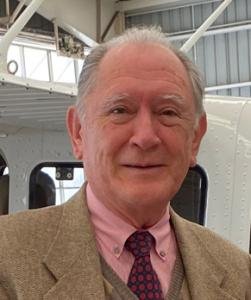
BARBA PINGARRON, LUIS ALBERTO
ANTROPOLOGÍA · Nivel 2
Desde 1995 es Laboratorio de Prospección Arqueológica en Universidad Nacional Autónoma de México
Ph.D. in Anthropology, Graduate Program in the Facultad de Filosofía y Letras/ Instituto de Investigaciones Antropológicas (Philosophy School/Institute of Anthropological Research), UNAM (National Autonomous University of Mexico) (1995). Master of Science (major in Archaeological Geology) in the Geology Department at...
Ph.D. in Anthropology, Graduate Program in the Facultad de Filosofía y Letras/ Instituto de Investigaciones Antropológicas (Philosophy School/Institute of Anthropological Research), UNAM (National Autonomous University of Mexico) (1995).
Master of Science (major in Archaeological Geology) in the Geology Department at the University of Georgia, USA (1984).
Industrial chemical engineer of the ESIQIE, IPN (School of Chemical Engineering and Transformation Industries of the National Polytechnic Institute) (1977).
He was first employed by the Institute of Anthropological Research in 1977. In 1983 became founder and is current coordinator of the Laboratory of Archaeological Prospection, IIA, UNAM.
He was named as Technical Subdirector (1988-1992 and 2004-2007) and Academic Subdirector (1999-2001 and 2007-2012) of the Institute of Anthropological Research, UNAM.
Fryxell Award for Interdisciplinary Research 2023, from the Society for American Archaeology, New Orleans, USA.
Member of the Mexican Academy of Sciences since 2011 and member of the National System of Researchers since 1984 and of the incentive program at UNAM (PRIDE) since 1990.
Was the leader of the National Network of Applied Sciences for Research and Conservation of Cultural Heritage from CONACYT (2014-2019).
Has been Member of the Standing Committee of the International Symposium on Archaeometry since 2000, as well as organizer of National Archaeometry Symposiums and the Diploma in Archaeometry in Mexico.
Member of the Special Reviewing Committee of PRIDE at CAACS, UNAM and the Academic Committee for scholarships in CONACYT. Founder Member (2002) of the International Society for Archaeological Prospection. Member of the Society for American Archaeology (since 1998). Member of the Society for Archaeological Sciences (since 1981).
Member of the Reviewing Committee of FAMSI foundation from 2005-2007 and member of the Scientific Committee of the Stresser-Pean foundation.
Main research line is in Archaeometry, includes the integral application of techniques of aerial photography, geophysics, and chemistry as a part of the prospection methodology to study archaeological sites from surface.
Pioneer in the field of study of chemical residues in archaeological floors to infer human activities on the occupied surfaces and the study of chemical residues in ceramic vessels in Mexico to interpret its use and function. Current research includes the study of production processes and uses of Mesoamerican ancient lime.
More than 154 published articles, 41 book chapters, 8 books, one manual and more than 136 technical reports. Editor of the journal Antropología y Técnica (Anthropology and Technics) (2000-2004) and member of several Editorial Committees.
Has imparted more than 52 different courses and is presently teaching in two postgraduate programs. More than 25 supervised theses, 47 advised theses and many more ongoing supervisions.
Visiting Professor at Universidad de Barcelona (Spain), Universidad Autónoma de Barcelona (Spain), Universidad de Cádiz (Spain) and at Universidad Nacional Mayor de San Marcos (Peru).
Over the last 45 years, has been participant of over 225 fieldwork seasons in various archaeological sites in Mexico and abroad, including Chiclana de la Frontera, Andalucia, Spain; Arica and Penco, Chile; Istambul, Turkey; Tuscany, Italy; Magdala, Galilee, Israel.
Outstanding developments:
He was the founder of the first Archaeological Prospection Laboratory in 1983 in the University and in the Mexican archaeology. Including the design and construction of the Mobile Laboratory that allowed the application of prospection techniques in archaeological sites of the country. In 1985 because of his Master Theses, proposed a methodology that integrated aerial photo, geophysical and chemical techniques to study archaeological sites from surface in rural areas. He pioneered the use of helium balloons to take aerial photos with remote control camera shooters.
Supported by CONACYT developed an original methodology to study archaeological remains below the streets in Mexico City that later was applied in many other cities, locally and abroad.
In a parallel research line linked to his formation in Chemistry, since 1978 developed the original chemical residue study in floor samples to identify enrichment patterns in architectural spaces. As a further development, the study of chemical residues in the pores of ceramic recipients has been very useful to approach the way pottery was used in ancient times.
As a consequence of the study of residues in lime plastered floors, he initiated the study of the lime production technology, including the involved pyro-technology and its use as mortar, plaster in construction as well as its role in nixtamalization of maize kernels.
| Nombre | LUIS ALBERTO BARBA PINGARRON |
|---|---|
| Área | HUMANIDADES |
| Campo | ANTROPOLOGÍA |
| Disciplina | ARQUEOLOGÍA |
| Especialidad | SIN INFORMACIÓN |
| CVU | 2911 |
| Institución | |
|---|---|
| Dependencia | COORDINACION DE HUMANIDADES |
| Entidad | CIUDAD DE MEXICO |
| Nivel | 2 |
| Vigencia | Inicio: 01/01/2022 |
| Fin: 31/12/2036 | |
| Categoría: | EXTENSION 15 AÑOS |

Últimas publicaciones Scopus
- 2025
- Lime treatments for food preparation identified in Postclassic Xochimilco (Mexico) ceramic sherds Archaeological and Anthropological Sciences · Vol. 17 Article
- 2024
- Experimental study of temperatures in the traditional lime production at Uayma, Yucatán Boletin De La Sociedad Geologica Mexicana · Vol. 76 Article
- Georadar prospection across the streets of the city of Mérida, Yucatán Boletin De La Sociedad Geologica Mexicana · Vol. 76 Article
- Integrated Archaeological Prospection Studies in Mexico: A Review One World Archaeology · Vol. 2024 Book Chapter
- 2023
- The use of geophysical prospecting techniques and chemical residues in paleontology Arqueologia Mexicana Article